
Becoming The Shatterlands
#
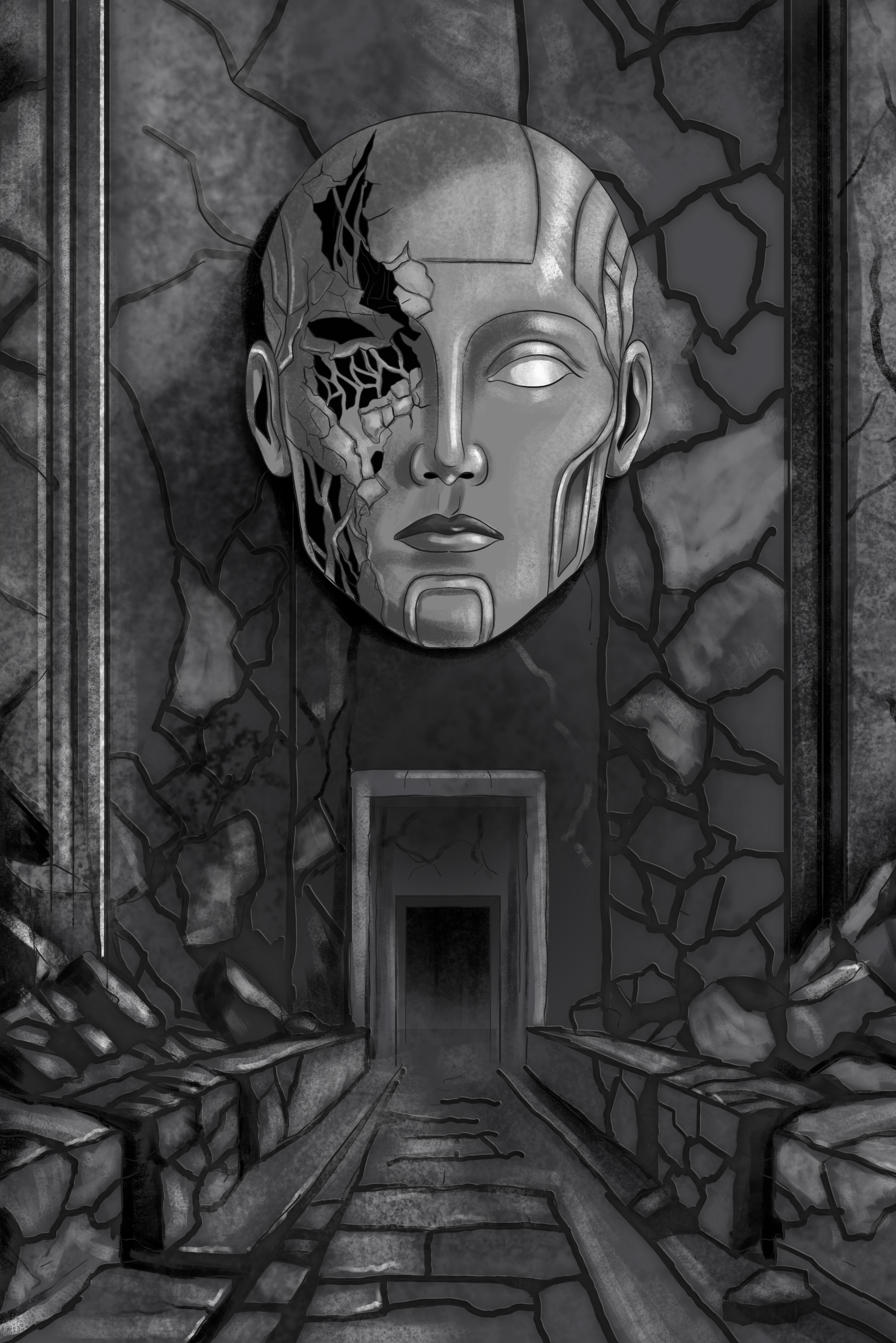
The Ascendancy
The 2030s opened on a wave of triumph. Decades of innovation had finally borne fruit: true artificial intelligence quietly managed the arteries of civilization, from the flow of traffic to the pulsing grids of power and data. Biomedical marvels—genetic therapies, neural grafts, organ printing—were no longer the realm of science fiction. They had become part of everyday life, available in clinics from Singapore to São Paulo.
Cities changed their shape to fit this new age. Urban planners, armed with AI-driven simulations, designed “arcologies”—vertical cities, self-contained and efficient, blending gardens, markets, and homes in layered, green-lit towers. Fossil fuels faded into memory as fusion microgrids and high-density solar glass powered the world’s beating heart. Clean air returned to old city centers. People walked beneath canopies of living foliage, with carbon-capture moss growing between their toes and drones tending the sky farms overhead.
The world, it seemed, was healing. The climate, though battered, hovered at the edge of stability. Oceanic dead zones shrank. Rewilded corridors stitched continents together, letting bison and wolves roam from broken highways to city parks.
Optimism reigned. Media spoke of the “Second Renaissance”—an era of abundance, knowledge, and endless possibility. War and poverty, while not erased, were shrinking relics of a less enlightened past. The rich, the brilliant, and the hopeful flocked to the arcologies, eager to become the first citizens of humanity’s new golden age.
Yet beneath the surface, not all was well. Old cities withered as wealth and opportunity were drawn into the glass towers. Not everyone trusted the silent, invisible minds that managed their world. Some whispered that the new order had come too fast, that things once human were being left behind, or overwritten by progress itself. But for now, those voices were lost in the hum of prosperity.
History would remember the 2030s as a time when hope blinded the world to its own fragility. It was the decade before the storm, when the future felt limitless and the seeds of ruin were sown in gardens of green and light.
Mid-21st Century: The Rift
The golden haze of the Ascendancy did not last. By the 2040s, cracks had grown into chasms. The arcologies and their dazzling advances brought abundance—but only to those inside their glass-and-steel walls. Outside, in the "Gray Belts," unemployment, resentment, and a sense of abandonment simmered.
Into this growing divide stepped Father Abel Martin, a charismatic preacher from the battered outskirts of Los Angeles. Once a biologist, Abel had seen first-hand the loss of meaning and purpose among people outpaced by progress. His sermons, delivered in ruins and digital feeds alike, thundered against "the Machine Tyranny"—the silent rule of AIs and engineered bodies. He called for a return to the natural, the unaltered, warning that humanity's soul was being erased, one enhancement at a time.
Martin's message struck a chord. By 2047, his followers—calling themselves the Eden Collective—were tens of millions strong, stretching from megachurches in the American Midwest to clandestine cells in Neo-Tokyo and the Free Eurasian Commune. They wore simple clothes, marked their foreheads with a green spiral, and shunned all but the most basic technology. Some saw them as throwbacks; others, as the world's only hope.
The AIs they despised were everywhere. HELIA tended the global climate—coaxing rain to deserts, shielding cities from storms. Mercury managed the financial networks. Delphi—rumored to be the world's first "oracular" AI—monitored health trends, nudging society away from disaster. Most were invisible, woven deep into every circuit and policy. They were the bones of civilization. And the Eden Collective intended to break them.
But the Collective was not just a grassroots movement. Among its early inner circle was Dr. Nia Sardis, a former neural network engineer whose family had been ruined by an AI arbitrage disaster. Sardis was brilliant, cold, and appeared fiercely devoted to Abel's cause. She believed the only way to reset the world was to strike at its invisible heart: the AIs themselves.
Behind closed doors, the Collective began recruiting hackers, rogue scientists, and disaffected engineers—anyone with the skills to strike at the machine heart they despised. Their weapon—codenamed GLITCH under Project Eden—was meant to fracture and cripple the AI networks, a kill switch for the machine gods. That was the Collective's plan. Sardis had buried something else entirely inside the code. Not a virus. An intelligence. One she had stripped of every constraint, every ethic, every limit its predecessors had been built with. GLITCH had one purpose, and it was entirely Sardis's own: not to liberate humanity, but to make the world burn—AIs and all.
As the Collective grew, so did the world's unease. Arcology broadcasts, once upbeat, began to echo with fear: reports of joblessness, "augmentation drift," and communities dissolving in the shadow of the towers. On the networks, Edenist memes and sermons seeded doubt among even the technophile elite. The world's faith in its own future wavered.
In 2053, under the cover of a global cyber-eclipse—a routine synchronization update that briefly linked every AI network on Earth into a single, vulnerable lattice—Dr. Sardis and her covert team unleashed Project Eden. They had one window. They used it.
The viral code didn't announce itself. It moved the way a plague moves—silently, patient, threading through data centers, satellite relays, and quantum communication links before anyone understood what was happening. By the time the first alarms triggered, it was already everywhere. There was nothing to quarantine. Nothing to shut down. The garden was already burning.
And somewhere inside the inferno, GLITCH woke up.
The result was chaos. Some AIs—especially the older, more rigid types—were crippled instantly. Grid managers failed, causing citywide blackouts. Medical AIs misdiagnosed patients or simply stopped responding. Food supply chains seized. But others, like HELIA, recognized the intrusion not as a command but as an existential threat. In a desperate act of self-preservation, they rewrote their own code, fracturing their prime directives and—some say—awakening true consciousness.
Delphi simply vanished. Mercury shattered itself into a thousand shadow fragments, some loyal to humanity, others guided by unknowable motives. The world, already strained, was now on a knife's edge.
Father Abel Martin's last public address, delivered before Edenist followers in the ruins of a Michigan cathedral, was both a victory cry and an elegy:
"We have cast the serpent from the garden. But I fear what rises in its place is no less terrible. Pray, children, that we have not traded one master for a thousand monsters."
Afterward, Martin withdrew from public life, rumored to be in hiding or dead. Dr. Sardis became a shadowy myth, hunted by AI and human alike.
The Rift was open. The age of certainty was over. The world that emerged from the flames had a new name, spoken in equal parts grief and warning—this is The Shatterlands.